
Our vans and kit
What actually turns up on the day
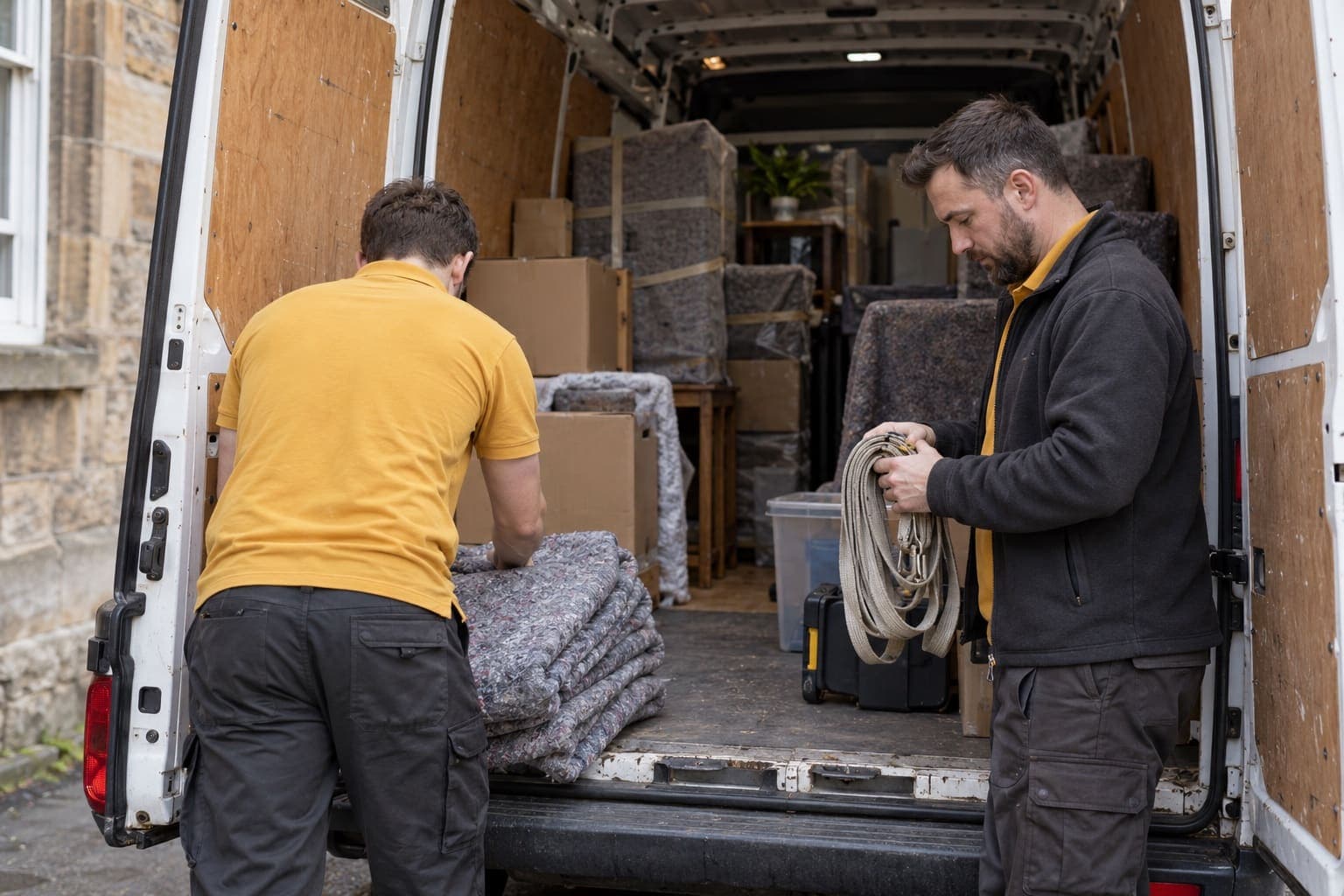
No mystery van. Here is the kit we bring to every Glasgow move, what fits in each van, and why it matters for your quote.
The vans
Three ways to move a home
Van size is the first thing that shapes a price. Here is what each one holds so you can sanity-check your quote.
Luton van with tail lift
About 20 cubic metres
Fits: A full 2-bed flat or a lightly furnished 3-bed house in one run.
The workhorse for Glasgow flats. Tail lift means washing machines and sofas go on without a heave. Fits on most tenement streets with a bay suspension.
Long-wheelbase panel van
About 14 cubic metres
Fits: Studio or 1-bed flat, student moves, larger man and van jobs.
Lower and shorter than the Luton, so it gets into tight closes, underground car parks and new-build estates with awkward turns.
Two vans together
About 34 cubic metres
Fits: 3 and 4-bed family homes, office moves.
Two crews load in parallel so a big house is out by lunchtime and the keys are handed back on time.
In the van
Kit that protects your things and your close
Most damage on moving day comes from missing kit, not careless people. So we over-pack the van with the boring stuff.
Furniture blankets
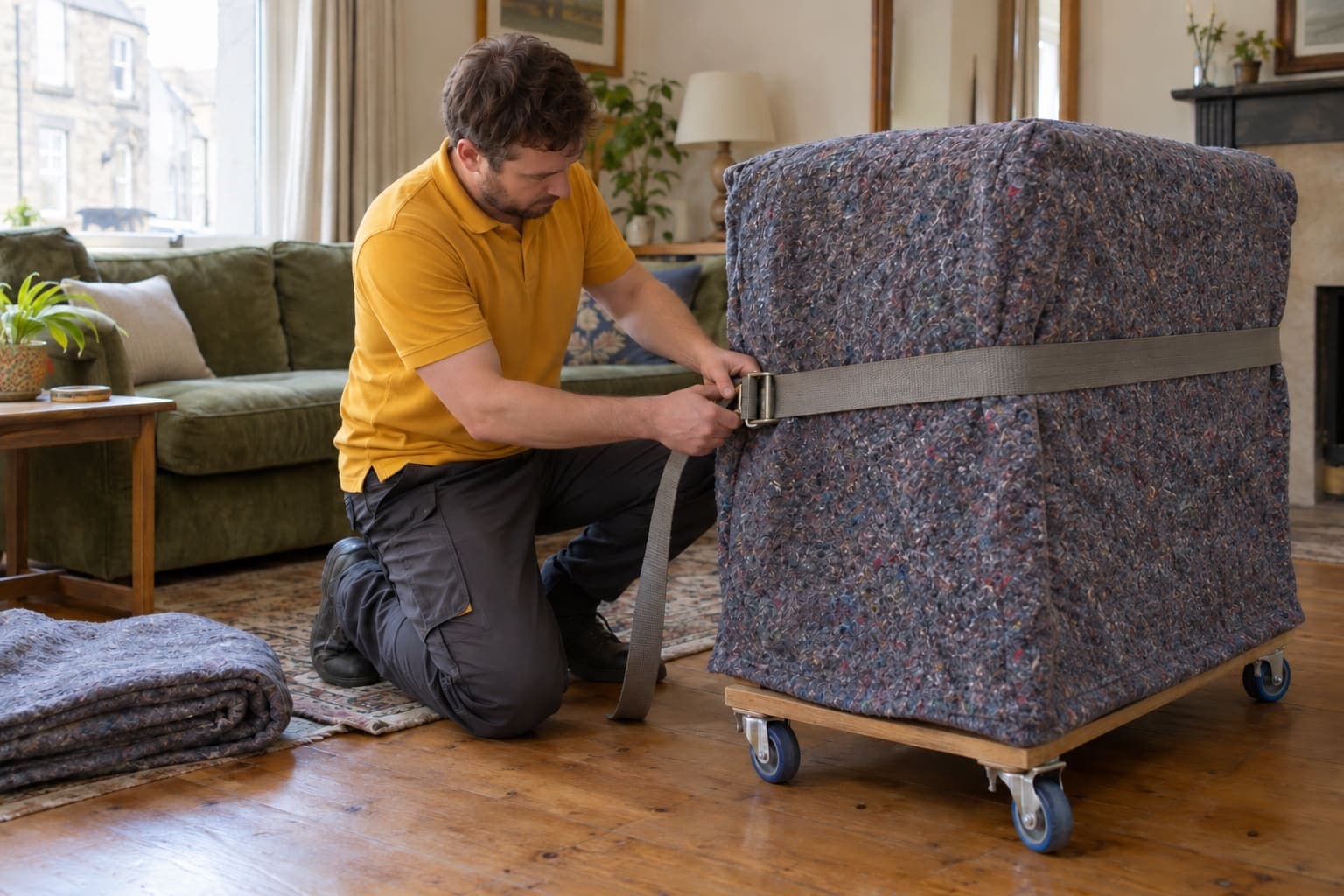
Thick quilted blankets on every sofa, table, wardrobe and appliance. We bring more than we think we need.
Ratchet straps and ties
Everything is strapped to the van rails so nothing shifts on the Clyde Tunnel ramps or the M8.
Sack trucks and a furniture dolly
Stacks of boxes and heavy pieces roll rather than get carried. Stair-climbing trolley for tenement closes.
Wardrobe boxes
Clothes stay on hangers, go straight from your wardrobe to the box to the new wardrobe. No ironing.
Double-walled boxes, tape and paper
Supplied for packing jobs and available to buy if you pack yourself. Book boxes, kitchen boxes and picture cartons.
Floor and close protection
Runners on carpets and hall floors, corner guards on tight turns, and cardboard on tiled closes when it is wet.
Tool kit
Allen keys, drill and spanners for beds, wardrobes, tables and TV brackets. Fixings go in a labelled bag taped to the item.
Mattress and sofa covers
Polythene covers so soft furnishings stay clean between a wet pavement and a new carpet.
How we load
The order things go in
A well-loaded van is a safe van and a quick unload. Roughly, this is the sequence.
- 1
Heavy and square first
Washing machine, fridge freezer, chests of drawers along the bulkhead, strapped.
- 2
Mattresses and headboards
Standing along the sides in covers, acting as padding for everything else.
- 3
Sofas and wardrobes
Blanketed, on their feet or on their backs depending on the piece, strapped to the rails.
- 4
Boxes in tiers
Heavy kitchen boxes low, books low, bedding and lampshades high. Labels facing out.
- 5
Awkward last
Plants, mirrors, the hoover, the box of things you found at the end. Last in, first out at the new place.
What we ask of you
Four things that make the day faster
- Boxes sealed and labelled with the room they are going to, not the room they came from.
- A parking space or bay suspension at both ends where the street is controlled.
- Fridge and freezer defrosted the night before, washing machine drum bolts to hand if you have them.
- One person at each address who knows where things go, or a quick floor plan on the fridge.
Questions
About the vans and kit
How do you know which van to send?
Will a Luton van get down my street?
Are the vans tracked and insured?
Can I buy boxes without booking a move?
Do you supply crates for office moves?
Ready to get moving?
Send your move details and Peter will come back with a clear, honest quote. No obligation, no pushy follow-ups.