
Stage 5 of 6 · Moving day
Moving House With Pets in Glasgow: Cats, Dogs and Everything Else
Practical guide to moving house with a cat, dog, small animals or fish in Glasgow, from moving day set-up to settling in, plus what our movers do to help.
By Peter, Clyde Movers GlasgowPublished 5 October 20267 min read
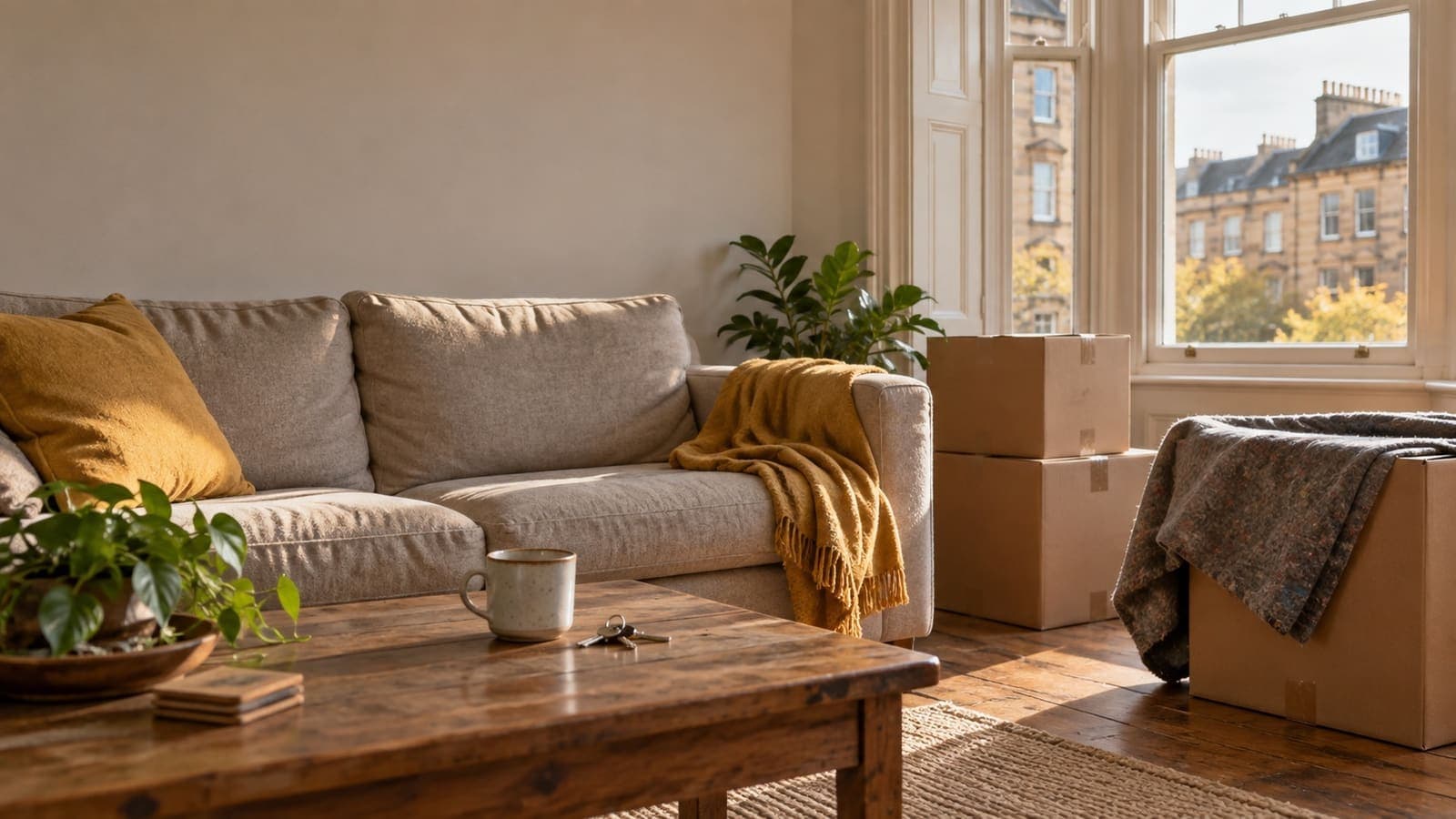
Of all the things we move, the ones that worry people most are the ones we do not put in the van. A cat under the bed, a dog barking at every box, a hamster in the hall. Pets find moving day genuinely stressful, and a little planning makes the difference between a calm move and a lost cat in a strange street.
Here is what works, based on a lot of Glasgow moves with animals in the house.
How do you move house with a cat?
Cats attach to places more than people, which is why they are the hardest to move. The aim is to make the day as boring as possible for them.
Before the day
- Get the carrier out a week early and leave it open in the living room with a blanket inside, so it stops being a signal that something bad is about to happen.
- Keep the cat's routine the same while you pack. Feed at the usual time, in the usual place.
- Find your microchip database login now. You will update the address on moving day.
On moving day
- Shut the cat in one room before the crew arrives, ideally the bathroom or a small bedroom, with the litter tray, water, food and bedding. Put a sign on the door.
- Tell the crew which room. We will not open it, and we will load everything else first.
- When that room is the last one left, put the cat in the carrier, take it to your car, then let us empty the room.
- Travel the cat in your own car, never in the van. Keep the carrier on the floor or belted in, and do not open it on the way.
At the new place
- Set up one room before the cat comes in: tray, water, food, familiar bedding, a box to hide in.
- Keep the cat in that room for the first day or two, then let it explore the rest of the home with the outside doors shut.
- Keep outdoor cats indoors for two to three weeks before letting them out. Go out with them the first few times, just before a meal so they come back for it.
- Update the microchip database with the new address the same day.
How do you move house with a dog?
Dogs cope better with the move itself and worse with the chaos. Most of the trouble on the day is a dog underfoot on the stairs or a dog that slips out of an open door.
- A long walk before the van arrives. A tired dog is a calm dog. Go out early and go further than usual.
- Not in the house if you can help it. A friend, a family member, a dog walker or a day at daycare is the best option. Loading means doors open all day, strangers in every room and heavy things on the move. Even a friendly dog is a trip hazard on a tenement stair.
- If the dog has to stay, use the same one-room approach as a cat, with a baby gate or a shut door and a sign for the crew.
- Familiar bedding comes off the van first. Tell us which box or bag it is and we will put it in the new place before the dog arrives, so there is one thing that smells right.
- Walk the new neighbourhood together that evening. It gives the dog the lay of the land and tires it out again.
- Update the microchip and the tag with the new address and your mobile number.
If you are moving into a flat with a shared back court, check whether dogs are allowed in it and where the nearest patch of grass is before the first evening.
What about small animals, fish and birds?
- Rabbits, guinea pigs and hamsters travel in their own cage or a small carrier, in your car, covered with a towel to keep them calm. Take water bottles off so they do not leak, and offer water at every stop. Load the hutch last and set it up first.
- Fish are the awkward ones. For a short Glasgow move, bag them in tank water with plenty of air, keep the bags in a dark insulated box, and save as much of the tank water as you can in sealed containers so the filter bacteria survive. Move the tank empty, because a full tank will crack. We will carry the empty tank and stand if you tell us it is glass.
- Birds travel in a covered cage in the car, never in the van. Keep the room warm at the other end.
What is different about moving with pets in Glasgow?
A few Glasgow specifics catch people out.
- Tenement close doors. On moving day the close door is propped open while the crew is moving things through, and so is your flat door. That is two open doors between a cat and a busy street. The one-room rule is not optional in a close. Our tenement moving guide covers how we manage the close itself.
- Main-door flats. The front door opens straight onto the pavement, often onto a road with traffic. Keep dogs on a lead until the car door is shut.
- Parking. If the van is a long carry from the door because the street is permit-controlled, the doors are open for longer. Our parking guide explains bay suspensions, which shorten the carry and shorten the day.
- Vets. Register with a practice near the new place in the first week, and ask your old vet to transfer the records. If your pet is on regular medication, do this before you run out.
- Pet-friendly lets. If you are renting, make sure the new landlord or agent has agreed to the pet in writing before you move. Do not assume a verbal yes will survive the first inspection.
What do the movers do to help?
You do not need to ask us to be careful, but it helps to know what we do as standard.
- Nothing enters the van unboxed. Loose items, open bags and anything an animal could be hiding in go on the van only once they have been checked and packed.
- Doors kept shut on request. Tell us which room the animal is in and that door stays shut. We will also close the flat door between carries if you ask, even though it slows us slightly.
- Pet things loaded last and off first. Bed, bowls, tray, food. Point them out and they will be in the new place before the rest.
- Tanks and hutches handled as fragile. Empty, wrapped and carried upright.
- No animals in the van. Ever. The back of a removal van is not ventilated, not heated and not somewhere a frightened animal should be.
If you would rather concentrate on the animals, our packing service means the boxes are done before the day, and our house removals crew plans the loading order around whoever is in the house.
Frequently asked questions
Can my cat travel in the removal van?
No. Cats, dogs and every other animal travel with you in your own car, in a carrier or secured, with the temperature under your control.
How long should I keep my cat indoors after moving?
Two to three weeks is the usual advice, longer for a nervous cat. Let them out just before a meal the first few times, so there is a reason to come back.
Can my dog stay in the house during the move?
It can, in one room with the door shut and a sign on it. But if there is any option for the dog to be somewhere else for the day, take it. The dog will have a better day and so will you.
Need a hand on the day?
Request a quote and tell us what animals are in the house, or call Peter on 07481 469221. We will plan the day around them.
Was this guide useful?
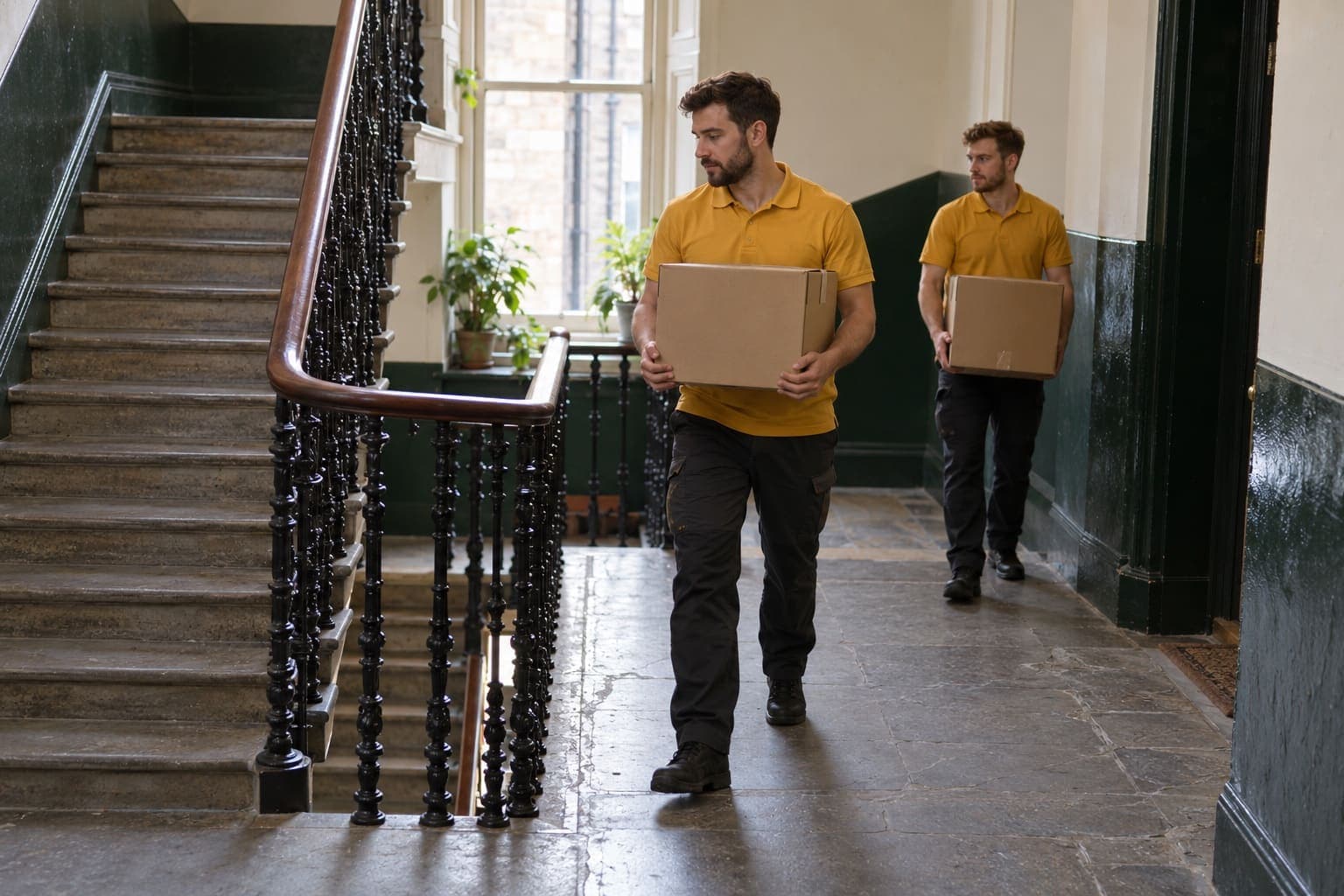
Next in your journey · Moving day
Moving From a Tenement Flat in Glasgow: The Complete Guide
Ready to get moving?
Send your move details and Peter will come back with a clear, honest quote. No obligation, no pushy follow-ups.